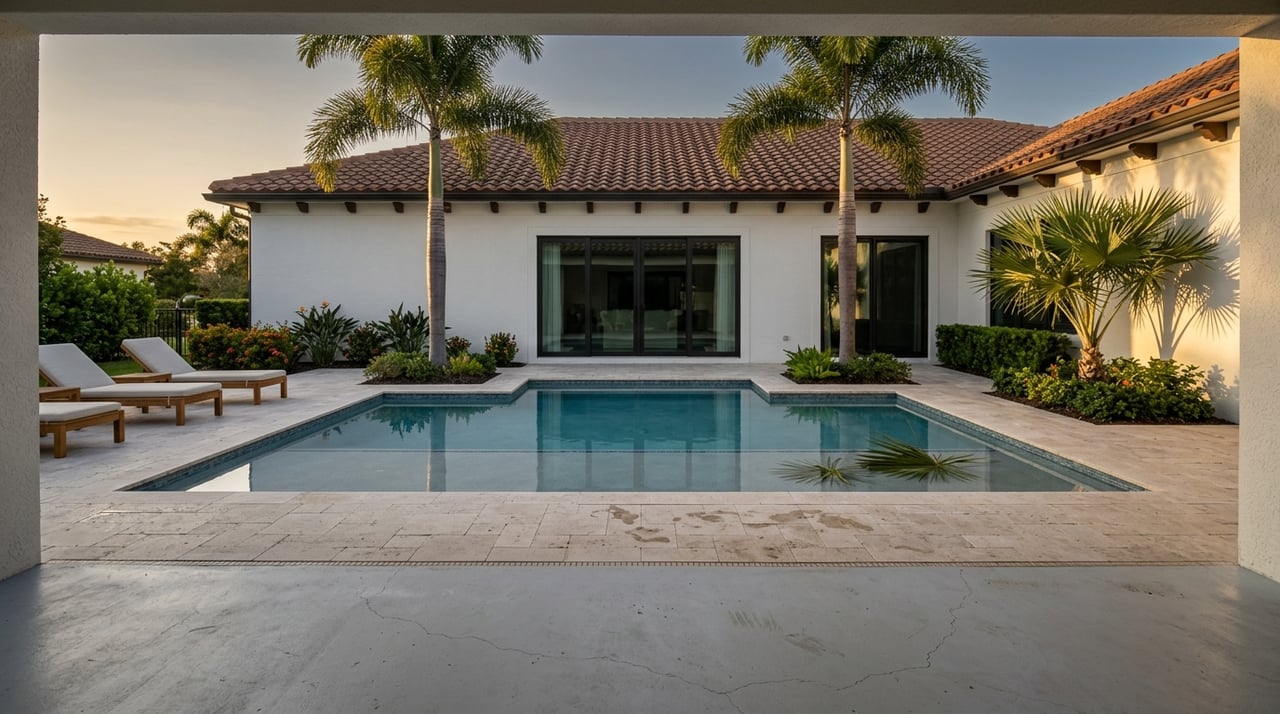
Seasonal Living In Gateway, FL: What To Expect Year-Round
June 4, 2026
June 4, 2026
Wondering what life in Gateway, FL really feels like from month to month? If you are thinking about moving full-time, buying a second home, or simply planning your next chapter in Southwest Florida, it helps to know that Gateway is less about dramatic four-season change and more about a steady lifestyle that shifts with the weather. When you understand how residents use the community throughout the year, you can picture your day-to-day routine more clearly and make a more confident move. Let’s dive in.
Gateway in Fort Myers 33913 has a consistent community foundation all year. According to the Gateway Services CDD, the district manages shared infrastructure and recreational spaces including stormwater systems, potable and irrigation water, street lighting, the Commons Pool, Sherman Soccer Complex, outdoor trails, and common areas.
That matters because seasonal living here is shaped more by how you use the neighborhood than by the neighborhood changing itself. The same places stay central all year, from the heated Commons Pool and Linear Park to the Sherman Soccer Complex, Fun Park, and member-only dog park. At The Club at Gateway, amenities also include golf, lighted tennis, pickleball, bocce, a resort-style pool, and a fitness center with group classes.
A practical way to think about Gateway is this: instead of four sharply different northern-style seasons, you get four lifestyle modes. Winter feels comfortable and socially active, spring feels warmer and transitional, summer is hot and wet, and fall feels quieter with improving outdoor conditions.
Winter, from December through February, is the season many people find easiest for long outdoor stretches. Visit Fort Myers describes this period as the dry season, with mostly sunny days, daytime highs in the upper 70s to low 80s, and nighttime lows in the mid-50s to low 60s.
NOAA normals for Fort Myers Page Field support that pattern. January averages about 74.7°F for highs and 54.3°F for lows, with 2.43 inches of precipitation, while February averages about 77.2°F and 56.6°F with 1.78 inches of rain.
For you, that usually means trails, golf, tennis, pool time, and neighborhood gatherings feel especially comfortable. If your ideal Florida lifestyle includes mornings outside, patio evenings, and a fuller social calendar, winter often shows Gateway at its most active.
Winter also tends to be a lively time in the broader Fort Myers area. Visit Fort Myers highlights winter as a strong season for festivals and arts events, including examples like the Caloosahatchee Celtic Festival in January, ArtFest Fort Myers in February, and the Edison Festival of Light in late February.
If you want to experience the area's event calendar at a time when weather is usually cooperative, winter and early spring are often the easiest months to do it. For second-home buyers, this is also one of the clearest windows to see the community in a highly social, outdoor-friendly rhythm.
Spring in Gateway runs more like a transition than a reset. March and April are generally temperate and drier, while May marks the start of the rainy season pattern.
NOAA normals show March at about 80.4°F / 59.6°F with 2.07 inches of rain and April at about 84.6°F / 64.3°F with 2.44 inches. Then May jumps sharply to 9.66 inches of precipitation, which is a meaningful change in how the season feels day to day.
For residents, this is usually when outdoor routines start moving earlier. You may still enjoy walks, pool time, or court sports, but you are more likely to plan around midday heat and growing humidity.
Spring is often a sweet spot if you like warm weather without the full intensity of summer. Mornings still feel inviting, evenings can still be pleasant, and the neighborhood amenity base remains easy to use.
At the same time, you start to notice a practical Florida rhythm. Patio time, trail walks, and other outdoor plans become more comfortable when scheduled early or later in the day.
Summer in Gateway, generally June through September, is when Southwest Florida's climate becomes most obvious. The National Weather Service says the rainy season runs from May 15 through October 15, with late May through June carrying the greatest severe-storm risk and July through early September marking the peak rainy period.
NOAA normals show about 9.38 inches of rain in June, 10.43 inches in July, and 9.00 inches in August. In practical terms, that means warm humid days, frequent showers, and afternoon thunderstorms are a normal part of life rather than an exception.
If you are relocating from another region, summer is the season that best reveals the area's everyday climate realities. It is still very livable, but your routine usually adjusts around heat, humidity, and rain timing.
Summer does not mean Gateway shuts down. The Gateway district says community events and outdoor activities are hosted throughout the year, though schedules can change for seasonal, holiday, maintenance, and weather reasons.
The Club at Gateway's summer newsletter also notes that activity slows a bit during summer, even as members continue recurring social games like Bunco, Mexican Train, and LCR. That pattern suggests a local rhythm many residents recognize: shorter outdoor sessions, more flexible plans, and a bit more emphasis on lower-intensity or indoor-leaning activities.
Visit Fort Myers advises planning outdoor activities in the morning or early evening during summer. For many residents, that means pool time, fitness, golf, or walks happen earlier, while afternoons are often reserved for indoor comfort or quick weather-aware outings.
Fall, especially October and November, often feels like a gradual easing of summer intensity. Temperatures begin to moderate, rainfall starts to ease, and outdoor schedules become easier again.
Visit Fort Myers describes September through November as a quieter period in the area, and that seasonal shift can show up in the daily pace. If you enjoy a calmer atmosphere, fall may feel especially appealing.
This can be a nice season for settling into a routine. You may find it easier to return to trails, outdoor amenities, and neighborhood activities without the same level of heat planning required during peak summer.
Even as fall becomes more comfortable, it still overlaps with the tail end of hurricane season. The Atlantic hurricane season runs from June 1 through November 30, so weather awareness remains part of life in Southwest Florida through summer and early fall.
That does not mean constant disruption, but it does mean preparedness and travel flexibility are part of smart seasonal living. If you are considering a second home in Gateway, this is an important part of understanding the area realistically.
If you plan to live in Gateway year-round, expect your lifestyle to stay active but adapt with the weather. Winter and early spring are usually the easiest months for long outdoor days and a fuller event calendar, while summer encourages earlier outings and more weather-aware planning.
That kind of rhythm appeals to many buyers who want access to amenities in every season, not just during part of the year. Gateway's parks, trails, pool, sports facilities, and club options support that consistency.
If you are buying a seasonal or second home, it helps to decide what version of Gateway you want to experience most often. Winter and early spring typically show the community at its most outdoorsy and socially active, while summer gives you the clearest picture of heat, humidity, and afternoon rain as part of everyday life.
Both views are useful. One shows the lifestyle that draws many buyers to Southwest Florida, and the other shows what practical year-round ownership really feels like.
If possible, try to spend time in Gateway during more than one part of the year. A winter visit may highlight comfort, events, and active amenities, while a late spring or summer visit can help you understand timing, pace, and weather patterns more honestly.
That broader view can make your home search sharper. It helps you choose not just the right property, but the right fit for how you actually want to live.
If you are exploring Gateway, Timber Creek, or nearby Fort Myers communities and want local insight on how the lifestyle changes through the year, Alicia Lee can help you compare neighborhoods, tour homes, and make a plan that fits your goals.
Get assistance in determining current property value, crafting a competitive offer, writing and negotiating a contract, and much more. Let me guide you through your home-buying journey.
ALICIA LEE
24031 South Tamiami Trail Bonita Springs, FL 34134